Roof rat control in Plano, Texas
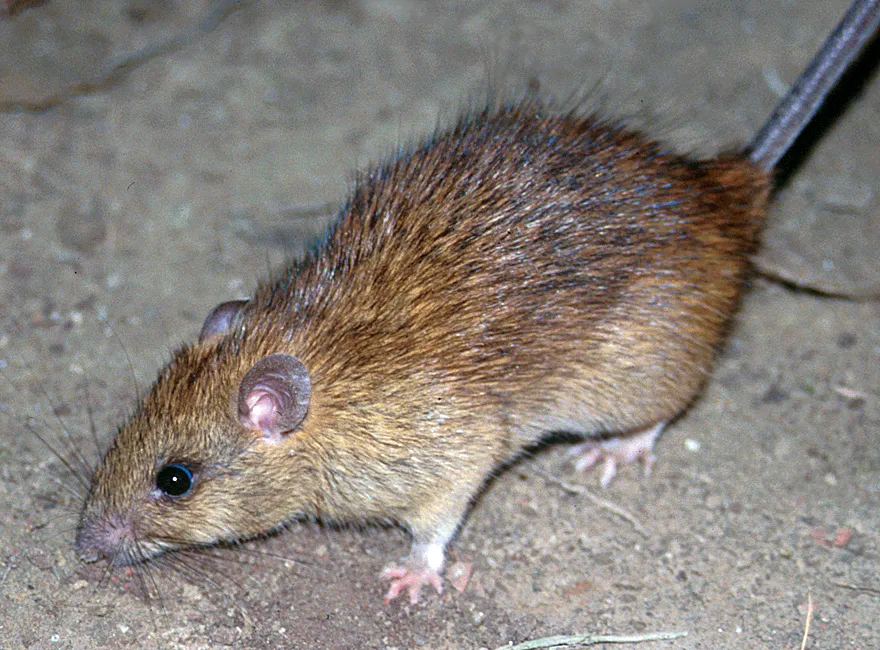
If you hear it overhead, it's probably a roof rat. They're slim, gray-brown to nearly black, with big ears and a tail longer than the body. Texas A&M AgriLife training material describes roof rats as preferring mature vegetation, vines and trees, and nesting above ground most of the time. In Plano that means live oaks and pecans hanging over the roof, ivy on the back fence and dense shrubs along the alley.
From there the attic is a short trip. They come in at the soffit corners, the roof returns, gable vents with torn screen and the gap where a lower roof meets a two-story wall. The noise gives them away. People describe running, rolling or scratching over the bedroom ceiling after dark, usually quiet again before sunrise.
A roof rat can get through a gap about half an inch wide, the size of a quarter. That's why the work happens up high: trapping in the attic and closing the roofline.
How to tell it's roof rats
Roof rat droppings are about half an inch long, slim with pointed ends, roughly twice the size of mouse droppings. You'll find them in the attic along the top plates, on the insulation near the hatch, or in the garage on top of the cabinets. Other signs:
- Running or thumping overhead from late evening until dawn
- Dark, greasy rub marks along a rafter or the edge of a soffit
- Pecans or fruit with the insides chewed out
- Chewed wiring or torn AC flex duct in the attic
- A rat on the fence top or a power line at dusk
What a thorough roof rat job includes
Roof rat work is mostly ladder and attic work. Before you agree to a plan, ask whether it covers:
- A full attic inspection, including each separate attic space over the garage, porch or bonus room
- A ladder walk of the whole roofline, plus a look at trees, fences and lines touching the house
- Traps set on the runways in the attic, checked on a schedule
- Roof returns, soffit gaps, vents and plumbing stack collars closed with metal and hardware cloth
- Advice on trimming branches back from the roof
- A cleanup estimate if the insulation is soiled
Something in the attic or the garage?
Want a local rodent technician to look at it? Same-day appointments are often available. (972) 325-9652
Step by step
The technician starts in the attic to see where the rats are traveling and nesting, then goes outside to find the way in, usually from a ladder. Traps go along the runways in the attic, set where the rats actually walk. Roof rats are wary of new objects, so the first few nights can be slow. That's normal.
Sealing is where the job is won. Many providers trap first, watch activity drop, then close the last openings, so no rat gets shut inside to chew a new hole or die in the wall. In late summer, when more rats are living outside, sealing can come earlier.
On the follow-up visits the technician checks and resets traps, looks for fresh droppings and confirms the sealed spots haven't been chewed. Once the attic goes quiet, they'll talk about attic droppings cleanup if it's needed.
Why Plano gets so many roof rats
Two things: trees and alleys. Neighborhoods built from the 1970s through the 1990s now have trees tall enough to touch the roof, and most blocks have a rear alley with a wood fence on both sides. Roof rats use the fence top like a sidewalk. Branches over the shingles are the on-ramp.
Roof rats turn up all over town, but the established streets with big trees see the most. Willow Bend, Hunters Glen and the older parts of East Plano come up often. Houses near the Arbor Hills and Oak Point greenbelts see them too.
Plano attics also stay warm enough through most winters that a settled group of rats can keep breeding. A hard freeze or ice storm tends to push the last of the outdoor rats inside.
Things to do tonight
Pick up fallen pecans and fruit. Bring the dog food in at night. Keep the trash cart lids shut. Don't toss poison in the attic: a rat that dies in the wall over your bedroom is a worse problem than a live one. If you want to compare what you're hearing with a mouse problem, read roof rats vs. mice.
Common questions
Will roof rats leave on their own?
Not usually. An attic with insulation, warmth and a way in is good housing, and they'll keep breeding up there.
Should I cut back my trees?
Yes. Branches that reach the roof are a direct path. Trim them back several feet from the shingles, and ask a tree service to handle the big limbs.
Can roof rats chew through wiring?
They can. It's one reason to deal with attic rats quickly and have an electrician look at any chewed lines.
Why does the noise stop for a few days and then come back?
Rats move between nest spots and sometimes between neighboring houses along the fence line. A quiet week doesn't mean they're gone if the gaps are still open.
Are roof rats the same as Norway rats?
No. Roof rats are slimmer climbers with big ears. Norway rats are heavier and dig burrows. See Norway rat control.
How long does a roof rat job take?
Often two to four weeks from the first visit to the last trap check, depending on how many rats there are and how much sealing the roofline needs.
Ready to have someone look?
Call and describe what you're seeing. Same-day appointments are often available. (972) 325-9652
Related reading
- Noises in the ceiling or walls at night: what's making them
- Signs of rodents in your Plano attic
- Why rats come back after an exterminator
Service areas: West Plano, East Plano, Downtown Plano, Legacy West and Legacy, Willow Bend, Los Rios, Hunters Glen, Deerfield, Russell Creek, Allen, Richardson, Murphy, Frisco, Wylie, Parker, Carrollton, The Colony.